00:00
The problem with "AI first" + Redwood's approach to fundamentals
Ryan [00:00] Nothing, nothing. And we realized that no one actually cared about this moment, that had no ability to convert those. Those users because there was something faulty with the lead form. And there's something that we look at often in our business called it's a full frame methodology. See, understand, act, AI. That's our approach. And once you've done those three things and the action you've taken has improved the quality of data, then you can start to get to AI, because.
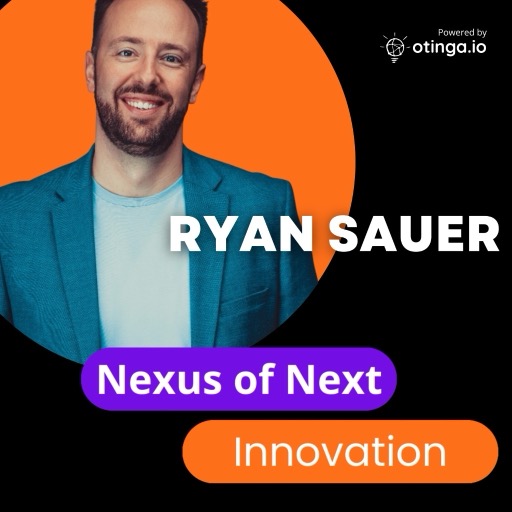
Francois [00:32] So, folks, welcome to the Nexus of NEXT podcast, and I have got the great pleasure of having Ryan Sauer here with us today. Ryan is an exceptional human being. He is a marketing powerhouse and is someone who's been around the block when it comes to innovation, doing things in a way that really is experimental in some ways and in other ways, incredibly successful. Ryan, you've gone through the exercise of starting two businesses and either selling or exiting those businesses. And now on your third business, you're like, well, if I can make it three times, then it's definitely not the market condition. It is what you know. And, Ryan, I know you well enough to know that you're one of those studious people that learns from every single experience, an absolute expert.
Francois [01:31] And so today, we are getting the privilege of having a conversation with you about how it's not just luck, it's actually what you know and how you look at the world. So, Ryan, an absolute pleasure having you here with us.
Ryan [01:46] That's a hell of an introduction. Thank you.
Francois [01:50] You know, the thing is, Ryan, you're actually someone that can stand both of those two shoes full. I would assume that it feels a little bit uncomfortable, like I do whenever. Whenever someone introduces me and I go like, wait, is that. Is that even me?
Ryan [02:06] Did that happen? Did I do those things?
Francois [02:10] Can I revisit? Is this maybe a past life or a different life or what is it? You know, one of the things that always inspires me about our conversations that we have is the fact that you almost always leave with personal lessons learned, but also imparting wisdom onto me. And so today is my privilege to actually share some of those insights with you, our listeners and so. Or watchers, for that matter. So today we're going to share three different stories, right, Ryan, of your experience in the world of entrepreneurship, business, and innovation, what you've learned from them. And then we'll close out with a little bit more information about how we see what's going to happen next in this world. If I was a listener to this podcast today, what would.
Francois [03:06] What would you think is the Key takeaway that I'd walk away with if I listen to the end of this episode.
Ryan [03:13] Okay, so I think we're going to cover some areas of failure and the lessons learned in, in. In shifting and pivoting. I want to talk about some areas where businesses have done some simple and very effective things to and how they have to think about those things. And then in terms of where we're moving, I have other very specific and potentially quite polarizing views, but I think it's important to choose a hill to die on. So I definitely have a view of where I think things are going. And my whole innovation lens is marketing. So I've got a marketing kind of background. So I have some views and theories on where that's heading at least.
Ryan [03:55] And if you have a business or you're in a business or you're a marketer of a business, this may be of interest or you may just disagree, which is even better.
Francois [04:05] Yeah, I think it's usually in that polarity where incredible truths often lie. Right. And so, yeah, as a marketer, potentially of a business, this is going to be a very interesting conversation as well as looking at innovation from a business leadership perspective. So, Ryan, when we think about the world of innovation and entrepreneurship, almost always we see a new product launched by XYZ Business or we see new business funded by XYZ Company or XYZ Venture Firm and it all looks so successful. But the reality is that it's a little bit more messy than that. And I know you've got a great story about failure and challenges around the world of entrepreneurship and innovation. I'd love to hear more.
04:58
The GA4 cliff that never came (and what it taught them)
Ryan [04:58] So when me and my business partner exited our last business venture and we started our business now Redwood analytics, were convinced that we had a sure thing, as I think many entrepreneurs are. And the idea was that there was this watershed moment that was going to occur where you had Google Analytics, which is the majority of most websites in the world, use analytics or Google Analytics as their measurement and their reporting side or tracking of user behavior. And there was this thing called universal analytics and it was being sunsetted and put away and they were moving over to Google Analytics 4ga4 and ultimately we believed that there was going to be this moment where everyone woke up. I think it was the 1st of May, 2023 4.
Ryan [05:48] We were convinced that people there was a day and everyone was going to wake up and everything would have fallen off a cliff. The tracking was gone, measurement was impossible. E commerce, marketing, people were ripping their hair out. And the day came and we waited and we put out marketing messaging and we put out reports and were on top of this whole thing. And were active on LinkedIn. Nothing, no comments, no phone calls. We had Google Ads running under keywords like how help me with my ga. Nothing, nothing. And we realized that no one actually cared about this moment. They were kind of like, oh, GA4. It's like universal analytics. And our whole business, we had built an entire very premium tier product for large corporates that we thought were going to pay us a fortune. And that's just not what happened.
Ryan [06:35] Like, so we had to very quickly sit there together, look at ourselves and take a hard view and go, if this isn't what we is actually happening, what is the next thing and what is it that clients are willing to buy? So what you're selling is not always what they're buying. And it was a tough moment when you've bet the house bootstrap startup you're not pulling a salary, you've promised your wife you're going to make a go of this thing and you're sitting there going, well that didn't work. And it's only a month in.
Francois [07:05] Yeah, yeah, that's, yeah. I think that, that sums up almost everyone's first entrepreneurship experience, I must say. And I think innovation is so close to that.
Ryan [07:19] Right.
Francois [07:19] Because when we look at what works really well, it is actually just tactical failing and tactical experimentation. Right. And so that was almost like a, a little bit of experimentation and failure happening in such a short period of time that it's almost reasonably survival while it is survivable. I mean you're sitting here today, but that's usually part of the problem is some businesses would not run those experiments with a short enough cycle that they can actually survive. And that risk is something that you can actually absorb and potentially in some cases find palatable as part of the journey to build the business. And so after that failure, what happened?
08:07
The pivot: from a premium GA4 product to dashboards + consulting
Ryan [08:07] So yeah, the necessity out of the panic. And I would, I won't really call it panic. We were, I luckily have a business partner who's incredibly level headed. He's, he's like a critical, like he's an optimist but he's, his critical thinking is off the charts. So I'm the dreamer and the move and shake and he's the one going, well this is how it's going to actually execute. And so we sat down and we realized that what clients are really Asking for is data visibility, data visualization, and trust in that everything's in one place that they can really understand. And so we started building more of a dashboarding business.
Ryan [08:45] And the success that came of that is we started working with brands that had multi channel environments that were looking for a party that wasn't one of the people producing the work, but someone external to bring all of that together and tell both compelling stories and to help make recommendations that were going to drive success. And so our business evolved into a dashboarding visualization company, but very quickly from there into a reporting and consulting side of the business and we started working with brands across multiple sectors. Automotive, fmcg, fast moving consumer goods, another sector called qsr, which is quick service retail such as restaurants or things like kfc. And that's where the business evolved to ultimately is helping those businesses get a handle on their data very quickly.
Francois [09:34] Very cool. And was there like an inciting moment, you know, like everyone's got that, oh, and this is when I realized X. Was there a moment for you like that when you realized, okay, well clearly GA4 isn't a thing for people yet. And we'll talk about how the market has moved recently, but now.
Ryan [09:58] What are.
Francois [09:59] We going to do and what was the next step? So was there a moment for you where you identified, oh, this is a need that we need to fill.
10:08
"Delight Junkies": turning reporting into a product people want
Ryan [10:08] It happened in two ways. So our business mantra that we worked out, when this started happening simultaneously, we actually worked out our line or our business mantra and we call ourselves delight junkies. So that's what we are with delight junkies. Watching a client see their data in a way they haven't seen it, understand performance or measurement in a way they haven't understood before. And watching them go, oh wow, I didn't realize, that's amazing. I want to show this to. Can we. What about the minute those questions start happening and the energy in the room lifts? Because often analytics and reporting people feel is incredibly boring dashboards and they're going, I don't understand half the data. We've got all these pie charts and bar graphs and I don't know what to do with this stuff.
Ryan [10:52] And when you see a client delight in the data, we are absolute delight junkies. So the moment was presenting some of this to clients either as a pilot or as a deliverable and then seeing the sheer delight in their faces and knowing that they could see something and they knew what decision to make next, they knew what action to take and knowing that we empowered that and then seeing them Go ask all the, asking all the forward questions. We knew we had a product and we knew that it had legs and retainer value and that clients would keep wanting this type of information.
Francois [11:25] Yeah, yeah, that's quite interesting. It's almost like treating customer delight as a positive signal or a parameter.
Ryan [11:34] Yeah, yeah, that's our success parameter, is their delight. And if we deliver a report that used to be a delight, and after four or five months we start to see the fire in the client's eyes diminish, we're like, we have to change the report. This has become boring. It's become table stakes. So now what do we do next? And that's our delight junkie philosophy.
Francois [11:57] Yeah. When it comes to innovation, that's usually a headache. Is like, what do you optimize for? You optimize for, you know, return on investment over a five year investment or over a five year investment horizon. And you think about, oh, okay, so we're going to optimize for accuracy, which may be useful, but when it comes to really making someone want to buy your product, it's really about how you make them feel and what their experience is. And so they're like, that signal for you was customer delight at the end.
Ryan [12:36] Absolutely. Yeah.
Francois [12:37] That's very. Did you just discover that by accident or was this something that was intrinsically ingrained for you?
Ryan [12:43] It was an accident. We would finish certain meetings and Adam and I would look at each other and go, that was the best meeting. We're so fired up. We're so the energy in us and then the energy to do the work was through the roof. And we realized that we actually get totally energized by clients delight. And that's where we came up. And it's the background of our computers. Every time you turn a machine on in redwood, the background is, is delight junkie.
Francois [13:11] That is so cool. Yeah. I must say that's a very nice way of serendipitously like discovering a purpose within the business. That eventually resulted in, oh, here's a great innovative idea. Let's put that in a package and give that to people so that you can package customer delight effectively at the end of the day.
Ryan [13:28] And the last thing on that is, I think everything we do, we keep looking at each other going, when we present this, is it going to happen? Are we going to get that delight fix? So we like always building the work to present or that. And our cadence is not every day, it's once every two weeks, once a month. We have that touch point With a client, when we have that moment, are we going to be able to deliver that delight rather than the. It's good, but it's another report.
Francois [13:55] Yeah. It reminds me of the story of how an engineer discovered the microwave oven. It was also like the serendipitous moment where they were playing around with these electronic equipment that creates radio waves. And I mean, back then health and safety wasn't as much a thing as it. As it is today. But he noticed that the chocolate bar in his upper shirt pocket started melting. Like, why did this happen? And that curiosity of okay, well first, maybe that's his thing. He likes melted chocolate. I don't know. But asking those questions and then eventually, what if we could trap these radio waves in a box? And now, you know, everyone and their grandma's got a microwave oven in their house. And it started off with that serendipitous moment. And I think when you explain the.
Francois [14:45] The process of discovering the parameter that you need to optimize for is very similar. Hey, it's like this. Oh, it's by accident. And all of a sudden it's so obvious.
Ryan [14:55] That's it. And simple. Yeah, it's always harder to convey your maybe more complicated outcome. But if you can try keep it simple, which is, I think one of the key premise of what we operate under is simplicity. And like you say, it's so simple, when you get, when you distill it, the simplicity is much clearer.
Francois [15:15] I feel like the best innovation in the world feels obvious, but it actually takes a lot of work to get to that level of obviousness.
Ryan [15:26] Absolutely.
Francois [15:26] Yeah. So what was your key takeaway from that experience? Going from. We had this hypothesis. Oh, were completely wrong to, okay, let's discover this new thing. Discovering a parameter customer delight to optimize for and then transition into. Let's build a business around bottling that customer delight in the form of data visualization and creating exciting data experiences. That's got meaning. What was the golden thread, in your view, that brought those together? The lesson that you've learned.
16:03
Becoming a "purist": measurement without an agenda
Ryan [16:03] For us, when we started our business, I think the thing we really knew is that we wanted to do something that no one else is doing as a purist. So our service, which is marketing, analytics and measurement, is not a new concept. Every agency is offering it. Every, every media agency, every creative agency, every consulting firm is offering it, but it's always a function of another purpose. So I'm either spending your media and I need to give you analytics and reporting, or I'm doing creative ideation and I need to give you proof of work and deliverables or I'm a consultancy and I have an outcome that I have to report and measure. Whereas we are purely measuring measurement for the sake of the brand and the client, without a secondary service behind it.
Ryan [16:51] That was the realization for us is that if you are there to serve clients, measurements solely for the betterment of the brand or the client with no other agenda, it is the purest form of work we can do. It's the most aligned form of work we can possibly do because what we're doing every day is only for their betterment. So it's. It's perfect. It's a perfect marriage and a perfect synergy.
Francois [17:15] Yeah. That's so interesting. So. So it sounds like when it comes to being that purist, it's doing something incredibly well that other people could do in house.
Ryan [17:27] Absolutely.
Francois [17:28] But they're not going to obsess about customer delight on the reporting and dashboarding.
Ryan [17:33] Because their customer delights it somewhere else.
Francois [17:35] Exactly.
Ryan [17:36] The client service, it sits in the delivery of the core job they have to do. Yeah. The reporting is a byproduct of that. Our sole delight is the reporting to. Exactly. I think what you. What you're saying.
Francois [17:47] Yeah, that's so interesting. So redwood analytics. Redwood. That is a. I mean, when I think about marketing analytics and dashboarding and creating customer delight and a tree, it doesn't normally feel that super connected. But there's obviously a name or a story behind this. And knowing you, it's a good story as well.
18:10
Why it's called Redwood (and what the tree metaphor means)
Ryan [18:10] I don't know if it's a great story. It's a personal story to start. And then it turned into more than that. So I got married. And, and. And, you know, my wife was, a couple of years ago, was. She wrote me a letter and she referred to me as her redwood. Tall and strong, and I create shade and I am immovable. But I'm also like. She had a whole analogy for why I was her redwood. And it's something that stuck for me as a true north or a direction for me as a person to be her redwood. And then I started reading up on redwood trees. The sequoia. The redwood is a form of sequoia. Sequoia tree. And I started reading up on them and they're incredible trees. They're quite amazing in terms of how they grow. They're impervious to fire.
Ryan [19:00] I could go on for hours now. I don't. I don't. I'm not a gardener. I don't really like trees or most things in that, but redwoods, for some reason I find them really fascinating and how their growth doesn't actually diminish any other trees growth around them. So the way their roots grow, they don't disturb other trees. They actually nurture and part nutrients to the soil. So red was a fascinating for me. And when it came to naming the business, Adam, my business partner, and I sat down and I was like, I have a name for the business. And obviously you make that decision as a team. But he didn't have. He wasn't particularly married to another name, so he was like, if you want to call it redwood, that's cool. But I absolutely love the concept of what the trees stand for.
Ryan [19:45] And there's actually a little redwood forest in South Africa. It's a satellite forest that they planted here over 100 years ago, but they're not as big as a California redwoods. So I'm not going to spend the rest of the podcast talking about redwood trees. If you ever want to go visit it's at a nature reserve an hour outside of George.
Francois [20:03] Very cool.
Ryan [20:03] Where there are actually redwood trees that you can go and visit. Yeah. Yeah.
Francois [20:07] That's incredible. And it kind of closely aligns with how I know you, which is to see mutual success grow. And I mean, when we think about how you're creating customer delight and doing analytics for anal sake, for the betterment of a brand, it sounds so. Well, it feels almost too good of a marriage. The name and the, and the intent of the business, which is absolutely fantastic. So you've been working in many different industries. I mean, you're one of those people that almost has a story or an experience for that whenever there's a topic of conversation. You've been around the block and you've seen so many different things. And so I'm curious, like, if were to double click on, like you've mentioned the fast moving consumer goods. Is this a tongue twister? Try saying that three times in the Mirror.
Francois [21:01] The FMCG market, you've had a client in that space. And I'm curious, like, there's been a story there that I think our listeners would be very interested in and a lesson that comes with it as well.
21:15
FMCG case: structuring data to unlock cross-brand comparison
Ryan [21:15] Absolutely. So we had a client in the fast moving consumer goods space. And when we say that, we're talking about brands that produce products that you buy in a shop. So it's Unilever or Tiger brands or in the chocolate space or Treat space, Mondelez all of these are fast moving consumer goods brands. You don't know their name but you know the things you buy like Jungle Oats or I don't know, Cadbury's chocolate bars. So we had a client in the space and they have many brands as many of these companies have multiple brands. And each of those brands spends a lot of money in advertising and marketing. A month, a year, a quarter.
Ryan [21:56] And they were working with different agencies and one of the biggest challenges they had was being able to compare multiple brands in a category so snacks and treats, being able to compare all those brands or across the business, being able to compare any other data across the brands in their business. And when you're spending that much money, million tens of millions across that many brands a month, there is definitely something that you should be getting out of that isn't just the report of that brand for that month. So what we did is we looked at all the different parts of their data in their media spend and their advertising and how they had structured it. We simplified that down to some keywords and data layers that we could extract over and over again.
Ryan [22:44] And we got them to apply it to each of the brand campaigns. And what that did for them was light up the data. And we like to use the word lighting update. The data is always there, but if you don't know how to organize it, you can't light it up. So we lit up that data for them and that gave them the ability to look at it in, they could cut it up and measure and they didn't even know how they wanted to use it until they had it right. And so just structuring that data, which is a project in itself and everyone's going, why are we doing this? Eventually the outcome of how you start using it starts to prove it. But that was the main project that we did for them. So it was just, we didn't change anything.
Ryan [23:24] But the naming and that unlocked everything.
Francois [23:27] It's crazy how sometimes there's this capability that you need to develop and once you have the capability or the toy, then it starts becoming obvious how to use it and that exploration kind of naturally cascades from that opportunity. I'm thinking about how for those that don't know, GPT has been available for quite a while before. So for those that don't know, GPT has been available quite a while before Chat GPT was released. In fact, GPT2 was quite capable. But the way you would create that experience was you would basically get a very expensive computer or rent one in the cloud and then start this model up and you'd literally have to feed in these things in a programmatic way. And it was very clumsy.
Francois [24:30] And so when ChatGPT came out and that was the transition point where they invited a bunch of beta testers to come and try this new technology and only when you had it in that form factor, it became incredibly powerful. And this comes from someone who's been part of using GPT and GPT2 in that weird programmatic way, and then transitioning, being part of the beta program and literally my entire paradigm shifted within that experience, even though I've been playing around with the tools and I think that's almost a similar experience. A lot of people when it comes to marketing data goes through absolutely is, yes, you have the data, but it's not in a consumable form factor that makes it easy to experiment with and to identify utilitarian or identify opportunities for utility within the business. Absolutely, yeah.
Francois [25:33] And so I think Redwood does exactly that. It sounds like, yeah, that's.
Ryan [25:37] What we're trying to. We're trying to take what exists and make it highly available and then usable by the people that need it most, which are the marketers and their teams, the brand teams.
Francois [25:51] Interesting. And so what did you learn from this experience? Going through that exercise of understanding the landscape, then understanding how we want to present this information to the client, to what does it even mean? And all along that way, convincing them that believe me, this is a good idea. Remember, this is for your future. We want to do this, it's going to help you in a lot of ways. We can't even tell you what it is. So what's been the lesson for you throughout that experience?
26:20
Simplicity as a strategy: outcome > process
Ryan [26:20] There are multiple stakeholders on that journey and for us it's simplicity in conveying an idea and simplicity in communication. So we made sure that no matter what forum were sitting in with the chief technology officer, the chief Information officer, the head of brand, there were so many different stakeholders that have different layers of knowledge, some with no marketing knowledge, some with no technology, some with no information architecture knowledge. We kept language incredibly simple and we followed that premise from that. Einstein once said, if you can't explain it to a six year old, you don't understand it well enough. And so in every single forum we spoke, no jargon, simplicity, and we spoke to outcome, not to process.
Ryan [27:10] And I think in our space, I believe in our space that often people speak from a place of comfort and that comfort to make them feel like I have a right to be in this room is complexity. And, and that complexity actually oscillates you. So we felt that it was, we moved far faster with simple language and then simple outcome, something that everyone could touch and understand without going and without giving all the rationale and information behind it. Just a simple output. So simplicity was the lesson there. And it's something we take forward to every conversation because what that client's deep knowledge is we can never expect to gather that they have for 15 years. But our deep skill we have to convey very simply.
Francois [27:56] Yeah, that's so true. Hey, I feel like that explaining and understanding at a five year old's level makes it so easy to communicate that you can do it while you're stirring the sugar into your cup of coffee. And sometimes what we see is we see many different ideas across many different levels of the businesses that we work with. And something that's quite interesting is almost always the ideas that perform the best and eventually make it into implementation and actually proving valuable are the ones that feels obvious and the ones that are like, you're saying super simple to explain with simple language. And it almost feels too simple in a way. You're like, okay, is that it? Is that the way it works? Yes.
Francois [28:46] We're going to do this thing, it's going to give us this result and we're not going to tell you like the complexity of the process. Don't worry about that. It's the outcome that matters.
Ryan [28:56] And that's something else that my business partner Adam used still says is like that complexity of the process. He always says, never let them see us sweat. What happens in the background to make it happen is not of consequence ready to the outcome. So that whole complexity in the background should only be seen as simplicity in the foreground.
Francois [29:16] Interesting. Yeah.
Ryan [29:17] I don't know if you entirely agree with that actually, or do you think that complexity needs to be understood?
Francois [29:23] I think that sometimes when complexity is too hidden, people tend to not value things as much as they should. I think like if we consider the complexity of just delivering this episode to your ears, who maybe whomever is listening to this episode right now, be that today, tomorrow, or in three years time, the complexity of doing that is immense. And so I think there's a necessity for value perception to have an understanding of the value and the complexity that goes with delivering this particular result. But when you're on the early stage of just trying to figure out whether or not this is something I want, it's the carton of milk on the shelf that's the result is the carton of milk.
Francois [30:20] And so understanding and seeing that in end result I think is incredibly important for people to be able to fundamentally understand what is it that we're talking about here. But once the what has been defined and we understand the why to a certain degree, the how gives it value. And so understanding the complexities of getting that carton of milk, however you feel about cartons of milk on shelves, how to get it there, it's incredibly complicated.
Ryan [30:52] Right.
Francois [30:52] And so I think that whenever you buy like a goods in a grocery store, it's always mind blowing to me that we can purchase that complexity at such a low rate. It's bonkers. Right.
Ryan [31:07] I love what you just said about the once you understand the what and the why, there is a need to understand the how. I think I absolutely align with that. You first have to make sure that you can get everyone to that and then maybe reverse engineer explaining the how we did it. Yeah, I love that. It's great.
Francois [31:26] But it's almost like if you, if you explain the how first, people go like where are you going man? Yeah, why should we care? Why should we care where? What are you trying to achieve? So yeah, I think it's very cool. Interesting. So from fast moving consumer goods or FMCG to automotive, you've spent some time in the automotive industry and some of the stories you've told me is quite interesting. How those two markets are completely different.
Ryan [31:58] Right.
Francois [31:59] And I'm curious, what experiences have you had in that completely different market and what have you learned from them?
32:09
Automotive story: the broken lead journey that burned budget
Ryan [32:09] They move at different paces. Once one's charging 11 Rand 99 for something or whatever it may be and the other one's charging 500,000.
Francois [32:17] Right.
Ryan [32:19] Consideration, sales cycles, behavior, brand affinity, brand awareness, price sensitivity, it all changes, right. Dramatically. And so how you think about them changes. The budgets are different, the expectations are different and how you measure that changes entirely. So and while it all makes perfect sense when said like that, sometimes you have the same agencies running both those accounts with the same people.
Francois [32:49] Yeah.
Ryan [32:50] So now you're going whereas. And some agencies have the depth bar category and brand. I get it. But anyways, in this space when we're talking about automotive, the interesting thing, an example, I'll give you a story from there. So we had a client in that space and they've been very well established in South Africa and they spend a fair amount of money on paid media or marketing with, with an agency or multiple partners every single month. And they had set everything up. They had a very proficient development house and a very proficient media partner and they were generating leads every month. And went in and as we do, we always start at the beginning. There's the ask that we're asked to solve, but we have to understand where all the data comes from.
Ryan [33:37] So we go through the journey as if we're a normal person looking to buy a car. We go to the website, we generate a lead and in doing so we identified that there was a whole bunch of media spend going to a specific section on the website that had no ability to convert those users because there was something faulty with the lead form. And even if it was working, the vehicle you were being recommended was not the vehicle you were searching or engaging with. And through that process were able to identify what that break was. And that was a campaign that had historically run and was going to continue to run. And we saved that client a couple of million rand in what would be wasted media investment.
34:19
Innovation in fundamentals (and why basics aren't "sexy")
Ryan [34:19] Again, to no one's fault because the media team is doing their job and the development team is doing their job, but no one's connecting the two together. So that was the case then, I guess the learning, if I get to that learning from our side, is that there's actually huge innovation in fundamentals. Everyone wants to innovate on the fancy, sexy new stuff. Let's get to AI, let's make marketing, artificial intelligence and agentic solutions for our marketing. But you're going, have we checked the fundamentals and do we continuously check and assess our fundamentals for data accuracy to ensure that what we're feeding these engines in the future is actually accurate? So there's huge innovation and we, you can save money, you can make money in the fundamentals.
Francois [35:09] I think one of the most interesting things about some of the biggest and most influential almost paradigm shifting innovations that's happened to us, it's been super incremental. And then there was one piece of incremental innovation that pushed it over and now it became completely disruptive and paradigm shift. And so when I'm listening to what you're saying around just focusing on the fundamentals first and using that as a space to innovate within makes a lot of sense because if you're trying to build in the air, it's going to be very difficult to do that if your foundation and your initial layers of bricks aren't really laid down fundamentally well.
Ryan [36:00] But you know, the difficulty there just to jump in for a second is it's not sexy. It's not, it's not a story that gets you a promotion. In corporate, when you go we just did the fundamentals better, everyone goes cool. It's not the thing that people want to hear about. So it's difficult to find that mix where people find, or corporates or people in a role can see the need and the value while still obviously it meets an agenda or a bigger objective. I guess I'm interested to know even your thoughts on how do you keep interest in fundamentals while obviously going like what you do, I think is a much, much. I use the word sexy because it's like we're going to do something different. We're going to innovate, we're going to grow.
Ryan [36:46] And it's the energy around innovation versus let's just do fundamentals, the brilliant basics as it's often referred to. People go like that. The story there isn't as exciting.
Francois [36:58] Yeah. And sometimes the story matters a lot. Hey, I think that when it comes to, and this is the common paradigm shift between incremental versus disruptive or paradigm shifting innovation is when you've got incremental innovation. It's almost like seeing doing the basics, then doing the basics slightly better then doing brilliant basics. Right. And then on the other side it's, we've got this pie in the sky idea, guys, and it's fantastic. But we've got no clue what we're doing and there's so many things that we need to learn and sometimes that big bit pays off and you need to do both. You can't just do the one or the other because this world moves so fast that you still need to do incredibly good at your basics. Brilliant basics, like you're saying.
Francois [37:46] But on the other side you need to focus on, okay, well what's the thing that's going to happen in five years?
Ryan [37:52] Absolutely.
Francois [37:52] And how do we plot the path or create a chart for a path to that five year opportunity that we're seeing just coming around the corner. And so that path still incremental innovation. And so it's this catch 22 where a lot of the times we see presentations that's got these great opportunities. But it sounds sexy. Hell, I want that. But it's not really something that's tangible or practical right now. But a lot of the times inspirational. It's aspirational to a certain degree and that's great. And you should be experimenting and trying different things out and seeing what those bets actually turn out to be. Some of them will be successful, but others will definitely not be successful. But I think the other. The other bit that we see specifically in the financial services sector being very valuable is actually that.
Francois [38:57] That n 2 incremental innovation. So instead of just doing okay, we're going to do the same thing, but just slightly better. What if we just did the same thing but brilliantly, Right? And so in a lot of cases, when you see that step change in the business that is just as exciting and just as sexy as pie in the sky idea, that may or may not succeed and may or may not be a bet that pays off. Look, I like my pie in the sky, and there's loads of bets that we take in that direction as well. Some of them create so much pie, you wouldn't even believe that. I could stretch that analogy as far as it'll go. And others are just that, just an idea that'll be fleeting in nature and usually come with a little bit of risk associated with it.
Francois [39:50] The one thing that I like about what you do when it comes to data and analytics is you help businesses take that step change from going data is doing okay to, oh, this is. This is incredibly valuable. That's.
Ryan [40:07] That's where we try the N Plus 2.
Francois [40:09] Yeah, yeah.
Ryan [40:10] But of incremental innovation, which is, you know, whenever I sit with you, I always want to, like, start writing notes. And then I realize this is actually going to be a podcast I can listen to again later so I don't have to take notes. Notes. Because that's.
Francois [40:22] I think I always take notes when we talk.
Ryan [40:24] Yeah, yeah, I was about to start taking notes. I'm like, oh, no, wait, I can just listen.
Francois [40:28] This is super cool. So, I mean, loads of incredibly valuable things. You know, when we think about the first lesson, discovering what you should be optimizing for and embracing serendipity to a certain degree while you're handling failure, then transitioning into, okay, great, how do we help this client and actually take them on this journey and make sure that as part of this journey, you show them the what and then later on or help them understand the why. And that is usually enough to get them across the line. And now finally looking at, okay, these organizations look at data completely differently. And so when it comes to the outcomes and the way they perform, having these congruent congruencies in the different initiatives in the business is incredibly valuable because that eliminates wastage.
Francois [41:29] But also b, make sure that when you're placing a bit, that bit's got a Higher likelihood of actually succeeding within the business.
41:37
The "four-frame" method: See, Understand, Act, AI
Ryan [41:37] Absolutely, I'm aligned with that. What's interesting is that there's still, I love that you said it earlier, golden thread. So across different categories, whether it's hospitality, travel, fast moving, consumer goods, automotive, banking, financing, there's still a golden thread in approach. Entirely different businesses with entirely different offerings, very complex in each of their offerings. There's still golden threads for us and there's something that we look at often in our business called it's a four frame methodology. See, understand, act, AI. That's our approach. If you can see it, you can understand it, you can take action. And once you've done those three things and the action you've taken has improved the quality of data, then you can start to get to AI. Because our concern is that AI is a black box in many cases.
Ryan [42:29] And if you ask the average person how it got to an outcome, the understanding of the methodology is I don't even know the system up. I don't even know what it learned of to make this decision. If it's your own corporate data, you should understand that well enough to know that the outcome has some semblance of congruence. So see, understand, act AI is our golden thread in our business that is applicable across category but they are all unique in how they deploy it.
Francois [42:57] Yeah, that's a very, very cool way of looking at it as well because a lot of people put AI.
Ryan [43:03] At the very beginning of the equation.
Francois [43:04] Yeah, doesn't make sense, right?
Ryan [43:07] I believe it doesn't. But I'm not an AI specialist, I'm a marketing analytics guy.
Francois [43:14] It's almost like you' got that sense of a level headedness and methodical approach you're praising in Adam's personality.
Ryan [43:24] Right. Listen, most of the intelligent stuff coming out of my mouth is something that Adam told me that's super cool.
Francois [43:31] That's super cool.
Ryan [43:32] That's an Adam thought that's become Ryan's belief.
Francois [43:36] So Ryan, let's fast forward a little bit. What do you see in the near future within of business and innovation? Cool.
43:45
What's next: brand marketing comeback + managed services
Ryan [43:45] So I've got two ideas. One's a little bit, I guess edgy. So the first it's saying I'm seeing a lot being spoken about on LinkedIn but maybe I'm in a little echo chamber of the algorithm. So who knows? I think business in South Africa and I'm going to speak from a marketing lens because that's really my safe Base. But I believe that business in South Africa and globally fundamentally misunderstand the role of marketing. Not advertising marketing. They've oversimplified it to performance marketing. And we've lost that age of like brilliant creative execution because we all want the results now. We want sales and we want leads. And, and if I put out marketing and we spend a million rand, well how many sales did I get this month? And there's that, that halo or that brand effect that really matters.
Ryan [44:38] We can all think back to our youth about either jingles or brands that we still, we would still. If you're going to go and buy something and if you're around one I guess is like we know Bathroom Bazaar and we can all sing a little jingle. And we all know if you had to think about different brands, they all have a resonance in your heart and in your mind because they hold that space for you. And I think that we've become overly functional on finding the audience sending out a very functional message and getting them to engage and buy without that brand halo effect. And so that's, I think that there's going to be a huge shift to understand, to a move to hopefully a move that businesses need to understand brand marketing and positioning in building long term brand value.
Ryan [45:24] That's one of them. And the second thought I have entirely on a second note is that with the move to AI, we are overly indexed on software as a service technologies. So people are buying tools and then stacking those tools and never having a manager of those, of that entire stack. It's just functional deployment of something. And I believe that there's going to be a move to manage services where tools that you buy have a partial management by the specialists of the tools that you buy. Because in special, in large corporate tools there's no brand owner or there's no product owner. It's just a tool that's supposed to deliver an outcome. So those are two interesting things I think are going to happen in business and marketing.
Ryan [46:14] Managed as a service, solutions being one and an understanding of long term impact of brand marketing in.
Francois [46:21] Yeah, I think that makes a lot of sense. Hey like when we see the patterns that people go through when it comes to that I think you called it the over indexing of software as a service. A lot of the times what people actually want is they want an outcome. And so traditionally there's been one of two ways to get that outcome. The first way is to get a person who's a consultant and work with that person directly and get the outcome that you're after.
Ryan [47:06] Well, to frame your problem, give you a solution and then give you the tool that will give you the solution. Exactly. That's the consulting way.
Francois [47:14] Yeah. And then on the other side you've got the DIY route which is either have someone internally that performs that function or have a person in that person or sub organization within the business that performs that function using a specific tool as a DIY type of approach. And so I think you're 100% right where there's a missing middle in between these two different opportunities of getting the outcome, the one being full service and the other one being diy, where you can still do it yourself to a certain degree, but you cannot afford or even occupy enough time of a world class expert in that specific discipline in your business. And even if you can you retain them and can you get them replaced when you need to.
Ryan [48:11] And are you mature enough to have that person? That's the other thing. So that you're adopting the technology and even if you hire the person, the journey they have to go on to get to the level of maturity to perform is not there yet. That's the, that's that same gap. It's the same gap you're talking about. I think that we need to enable people through managed services to get proficiency to then eventually adopt in house, but through maturity.
Francois [48:36] I think your brand comment is very interesting because if we look at how mechanization has dramatically increased the quality of life of every single person in this room, as well as listening to this episode today, that means that a lot of our basic needs have been met.
Ryan [48:58] Right.
Francois [48:59] If you're listening to this episode, you probably have enough to eat, you have electricity, you've got wi fi. If that's part of Maslow's hierarchy of needs is still up for debate. But what we found is that. What I found personally is that a lot of people find meaning in satisfying those needs. And the more we mechanize the world and the more we leverage AI, the less time and effort we directly have to spend in satisfying those needs. And that reduces the amount of purpose that each and every one of us has.
Ryan [49:39] But it also then creates. I don't know if you're going with it. I'm going to add something there. Yeah, it adds your layer of engagement, layer of want. So what you want versus what you need is different, of course. But you now you're in that small gap in your mind where you still have the decision, quotation, decision, whatever going on in your brain, you have to make a decision to go with this or that. Do I go with Uber or Mr. D? Do I go with Lamborghini or Ferrari? Do I go. You still have an affinity. There's a reason why people support Arsenal over Liverpool. There's, there's a reason and that's you're not going to change with AI. That's, you're not going to. Those are, those are different level. Right.
Francois [50:25] And I think that's where your comment about brand becomes so relevant. Right. Because when your purpose was derived from satisfying your maslow hierarchy of needs, you're looking for purpose outside of yourself. And so then if you identify a brand that gives you purpose to a certain degree or assess something about yourself into the world of Apple, Nike, Adidas, and the list goes on and on, that gives you purpose to a certain degree. And yes, that influences your decision most certainly. But I think we see we're going to see a lot more people caring a lot more about the purpose behind a brand and the identity of a brand than we've had in the past. Regardless of how that influences their decision to purchase a product or use a service. Yeah, very interesting pattern. Yeah.
Ryan [51:25] And, and sorry, the last thing is the performance side can still. That performance of leads and sales can still be heavily influenced by very good brand. The speed to quote, the speed to conversion, the. Let's just take insurance as an example. If you have brand affinity and you get a quote and it is 200 grand a month more expensive than a competitor, but you trust that brand, they've got that, they pay out, they're large, I'll be covered there. The service will be good. You may genuinely go with that brand over that brand affinity and that brand belief and the speed of conversions and the values within. So we measure performance. It's weird. The performance measurement guy that does all the data analytics of performance is telling you that brand matters. But it does and we've seen it in brands that build that relationship.
Ryan [52:18] They all the other metrics as a halo effect of that brand marketing get huge, huge value.
Francois [52:27] I think someone much wiser than I once said that brand is one of the most high leverage marketing assets you can find in this world. And I think that really definitely resonates with what you're saying around using brand affinity as a way to influence a decision based on not just Rands and Cents, which is let's be honest, in a lot of the cases, buying something cheaply doesn't necessarily mean you got great value for money.
Ryan [53:00] 100%.
Francois [53:01] Right? So. So, Ryan, if there's one message that you'd like to leave the listeners with.
53:08
Ryan's closing message: fundamentals, simplicity, sustainable execution
Ryan [53:08] Today, if you can, if you can start with the fundamentals and keep it simple and execute on that sustainably in whatever it is that you do. I think it creates, well, I believe it creates a huge, I like to use the word belief on this one. I believe it creates trust. I believe it creates an interesting sense of speed to delivery and it takes people with you. So it's about that simplicity and it's about that starting at the basics and just hammering those away until such time as you've got that incremental innovation. That's where we play and we find a huge amount of satisfaction and joy in doing it.
Francois [53:53] That is super cool, Ryan. Where can people find you online? Is it on LinkedIn?
53:59
Where to find Ryan
Ryan [53:59] I was about to give my physical address and I was like, no, don't do that.
Francois [54:01] Not yet, not today.
Ryan [54:04] I'm on LinkedIn. I need to share more of my thoughts, but I'm on LinkedIn. We have a website, RedwoodAnalytics Co ZA and you can find me on those two platforms. I'm very good at responding to my direct messages and inbox on LinkedIn. Yeah. And I'm planning on developing some more content or conversations with you because I have some thoughts and maybe a YouTube channel one day.
Francois [54:31] So more to come from Ryan Sauer here from Redwood Analytics. Ryan, it's been an absolute pleasure having you with us today and thank you for sharing your personal experiences and the knowledge that you've acquired from it. It's been really a thought provoking conversation for me, which is always great.
Ryan [54:47] This has been great. Thank you.
Francois [54:49] Awesome.

 Claude
 ChatGPT
 Gemini
