00:00
Episode intro
Francois [00:00] You actually hate the word innovation.
Danielle [00:02] I hate the word innovation.
Francois [00:03] Why?
Danielle [00:04] I think it's such a nebulous term. It's got this stigma, innovation, it needs to be disruptive, it sits in Silicon Valley. What I find sexy about innovation is that when people are solving real human problems and meeting people where they are. Sexy innovation for me isn't about the latest and greatest and smartest tech. It's really about solving human problems. An email was spread to our division saying, in a week's time, we will have a hackathon, come with your ideas. Someone even presented their side hustle and what they sold on the side. It had nothing to do with the organization, nothing to do with the business, nothing that would make them revenue, it would save them costs, it was a disaster, it was a debacle. People innovate broader, more creatively and bigger when there are guardrails. The research very clearly shows that people innovate more broadly and more disruptively when given guardrails. Sometimes you need to kick the math out of the room. You've put allocated variables to your value and your complexity. Sometimes you can't always put values to that and that doesn't mean you don't do it.
01:24
Danielle's background and what you'll learn today
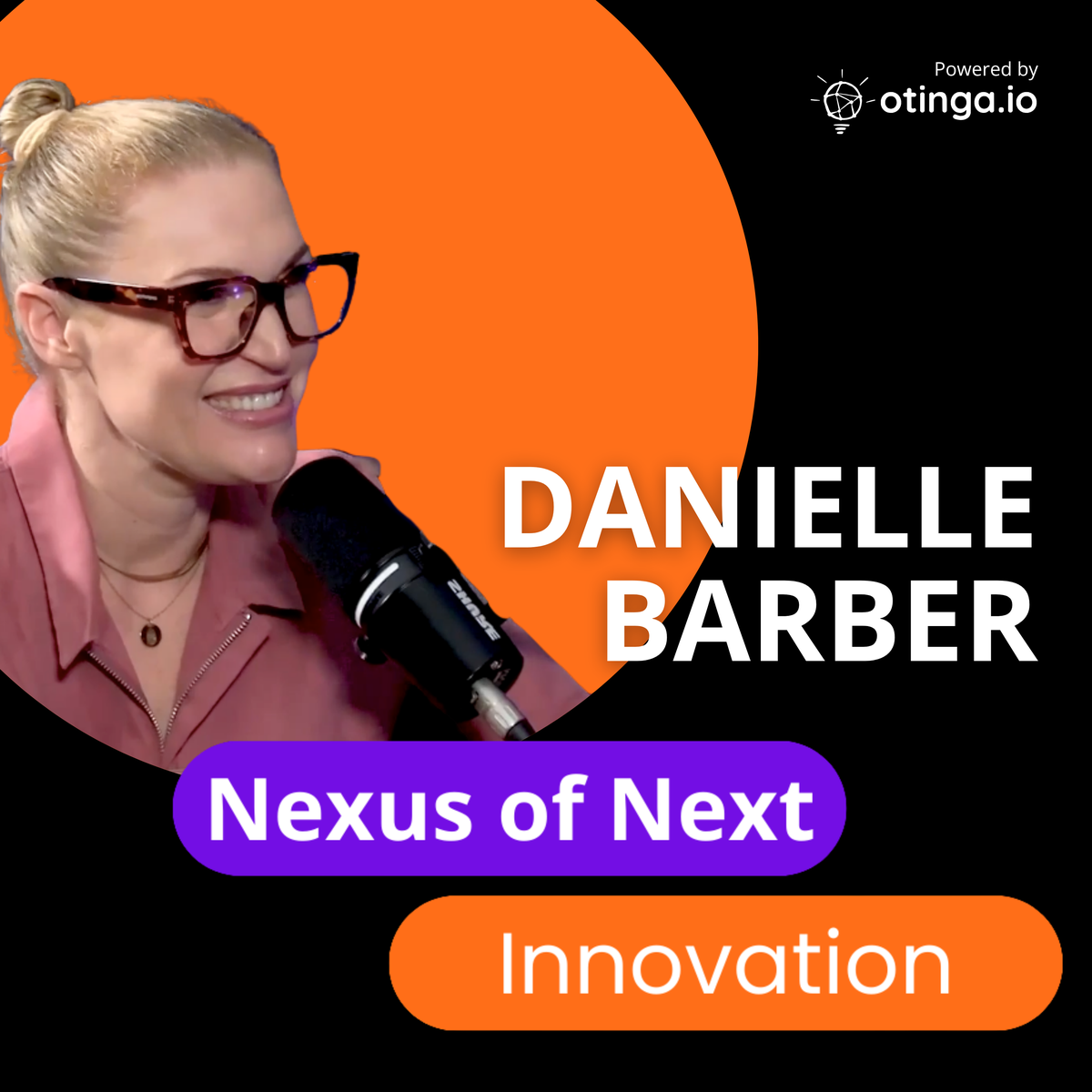
Francois [01:24] Welcome everyone to the Nexus of Next podcast. It's an incredible pleasure for me to welcome Danielle Barber to the podcast. Dani, you're someone that's got a wealth of experience in the world of innovation. You've spent the last two decades of your life learning, working, breathing, eating, sleeping innovation. You started your career off at Cape Town University, eventually completing multiple different qualifications at business schools, including Harvard Business School. The thing about Dani that I always take away from our conversations is she's a person that either comes in and reaffirms something you already know, and remember this is important, or she takes a torch and she shines it on a topic that should really be impactful for you. The bit that I also enjoy so much, Dani, is I normally leave our conversations invigorated because you've got the insight to actually know how to look at innovation, but on the other side, you've got this mad energy that helps you execute against whatever opportunity we've got. So, Dani, on that note, a big, big pleasure. Welcome to the podcast.
Danielle [02:39] Thank you for having me. I'm privileged to be here. Thanks, Francois.
Francois [02:42] Fantastic. So, Dani, today's going to be a jam-packed session, like we already know and like you'll find out. If someone were to listen to this podcast, what would they get out of today?
Danielle [02:53] So, as you said, Francois, I'm a massive fan of learning and I think part and parcel of that is paying forward your own learning. So, I think today, I've got two, I guess, personal stories of innovation that I've experienced. One, I guess, a really positive story. It's a really great story about how I watched a bank use gamification to help financial literacy for thousands of individuals. Really great story. We'll get into that. And the other one, I guess, really how not to innovate, a really interesting personal experience of a company that I was employed at that tried to extract innovation out of its people, miserably.
Francois [03:40] That happens.
Danielle [03:41] That happens, unfortunately.
Francois [03:42] Yeah, I think it's going to be an interesting episode today. And so, Dani, when we started this conversation, you shared like a very polarizing view. You actually hate the word innovation.
03:57
Why Danielle hates the word "innovation"
Danielle [03:57] I hate the word innovation.
Francois [03:58] Why?
Danielle [03:59] I think it's such a nebulous term. It's got this stigma, innovation that needs to be disruptive. It's in Silicon Valley. You bring it up in a boardroom, I think most people start eye-rolling. It's often slideware, it's marketing. I feel that the word innovation is such a broad topic. Innovation for me can be anything from disruptive to a unicorn, all the way down to improvement, optimization. So, you know, innovation for me could be many things, but I think a lot of the time it's sparkle and marketing.
Francois [04:43] Yeah, it's quite sad because when we look at some of the most successful innovation projects out there, there's an interesting pattern that links them all together. What's your viewpoint on how successful innovation looks like?
04:59
Successful innovation never makes headlines (The ATM receipt slip)
Danielle [04:59] You know, for me, some of my favorite innovation stories never make a headline, never make it onto a news story or a blog. One of my favorite innovation stories is, and every one of us will probably know it, but not understand the impact it has. If you go to an ATM and it asks you, would you like a slip? That was an innovation that saved banks millions of rands in paper, not to mention the sustainability impact, but not a massive disruptive innovation, not anything that made headlines or won awards, didn't come out of some garage team that sat on beanbags, but, you know, some of my favorite innovations are the ones that aren't talked about.
05:46
"Sleek and sexy" doesn't mean what you think it means
Francois [05:45] Yeah. It's almost like it doesn't necessarily need that sleek, sexy slide where it's actually about how the rubber meets the road, almost.
06:00
Deep dive: The bank/gaming partnership that worked
Danielle [05:59] 100%.
Francois [06:00] So, banking innovation on that topic. So I'd love to just understand a little bit more what you guys managed to do there, helping with financial literacy, which we all know is a real big problem, even for some of us when you've got too much month at the end of your money in January. Just walk us through this experience of innovating alongside a bank.
Danielle [06:28] I love this. It's a really cool story. So a bank, and the human problem was we've got a really large mass market of individuals that are unbanked. A lot of the reason that some of these individuals are unbanked is education. They just don't understand how banking works. They don't understand how saving works. There's a lot of misinformation. So their problem was how do we educate potentially mass market or the unbanked on just the basic financial literacy around owning and working a debit account.
Francois [07:11] So true, I mean, it's not something you learn in school, I still think they should, but anyway.
Danielle [07:15] On the other side, there was another partner, not at a bank, and this is one of my favorite things about this example, is it was banks and brands, I mean, it was a bank and a brand that had nothing to do with each other, but they looked externally to co-create. So the other company was actually a gaming company, mobile gaming, and what they wanted to do was try and enable entertainment to as many people as possible, but obviously that same market, a lot of the time, although they had the time and the inclination to game, couldn't necessarily have the funds to buy games. So an incredible synergy where potentially the bank could fund the game, the end user could then be entertained and use the game at the end of the day, and what was in it for the bank was, again, potentially the leads to those individuals, and what was in it for the gaming company and the people at the end of the day is education and entertainment. I think the final step, which I love, is this game wasn't some PlayStation fancy virtual reality, it was a USSD game. So nothing fancy, it was really about, you know, how to collect money, save money, put it into a bank, a really simple, interesting game, but for me, one of my favorite stories.
Francois [08:50] And USSD, or Unstructured Supplementary Service Data, that's like a, it's almost like an SMS type of interface, like text-based, very much choose option one, two, or three. A lot of the chatbots you would have seen a while back had that same interface, right? So it wasn't a real sexy interface. In fact, it depended on the feature phone that someone had, right?
Danielle [09:11] Exactly, Francois, and you've hit the nail on the head. For me, what I find sexy about innovation is that when people are solving real human problems and meeting people where they are. Sexy innovation for me isn't about the latest and greatest and smartest tech, it's really about solving human problems.
Francois [09:30] Yeah, that is so, so, so cool. And I think from the perspective of people actually participating in playing this game, this is something they could do without any real big investment from their side, other than using their own phone to play the game.
Danielle [09:48] No investment but time. And it was a trusted platform. There were thousands of individuals, you know, who knew there was an USSD marketplace, but there is.
Francois [10:00] Yeah, that's crazy. And I think that's also part of it. A lot of the times when we think about innovation, it needs to be this big announcement, this big press release, it needs to have all of these certain attributes. But at the end of the day, like you're saying, it's actually just solving the problem.
10:25
The pattern behind successful innovation
Danielle [10:21] Solving the human problem.
Francois [10:23] Yeah, that is so, so, so cool. So if we were to say pattern matching, successful innovation, knowing the problem, I guess, is the one part, what would be the other part? Is it like matching it or?
Danielle [10:37] Yeah, I guess it would be not over-engineering the solution for me, potentially. So, you know, bringing in those guardrails early. So yes, understanding the problem for me, number one, the hugest place to start. Number two is really understanding the person you are solving for. So, you know, try not to bring in your own bias when you're solutioning. Try really empathize with those people, understand where they live, how they live, what tools and technology they use, how they communicate. It's empathy.
Francois [11:16] Yeah, that's a tough one, especially when you think about where most innovation comes from, which is technologists. And so I love how you say it's not only the problem, it's actually the human problem that you need to solve. And that adds that element of humanity that sometimes gets lost in the lines of code, if you will, right? Yeah, very, very interesting.
11:40
How NOT to innovate: The corporate hackathon disaster
Francois [11:40] So Dani, you've had an interesting experience with an organization that decided they wanna waste a lot of money.
Danielle [11:49] And, inadvertently. Yeah, this was many years ago, and I'm not gonna name names. And the intention was good, so. But it was a great learning. I think this was probably, oh, must be 10 or 15 years ago. It was when everyone was talking about Google and innovation and sitting on beanbags and getting free pizza. And everyone was talking about innovation. Some big enterprise organizations were trying to implement innovation on the side. Some organizations were trying to do it bottom up and really encourage ideas from their people. And I think that might have been what the intention was behind this initiative. But essentially, the organization that I worked with decided we want to try and elicit great ideas from employees on the ground. And I think it went a little something like this. An email was spread to our division saying, in a week's time, we will have a hackathon. Come with your ideas. Maybe not word for word, but that is what I understood. And I guess, 15 to 18 years ago, no one even knew what a hackathon was. They assumed that was a bunch of coders checking your firewall. So, with that in mind, I think everyone read it as a corporate email that went in. Those that even read it, great. The day of said offsite arrived, and I don't think anyone had given it a lot of thought. And when these innovation ideas were presented, I mean, someone even presented their side hustle and what they sold on the side. It had nothing to do with the organization, nothing to do with the business, nothing that would make them revenue or save them costs. It was a disaster, it was a debacle. And I think what surprised me is how shocked the management team were as to why people didn't have better ideas in and around what they did. And I guess the reality is, I don't think they even knew that's what they had to innovate around.
Francois [14:11] Yeah, so there wasn't a brief, actually, to say this is where we would like you to innovate. I must say, it's quite disappointing to hear that they didn't become like a teacup sales company after that.
Danielle [14:24] Yeah.
Francois [14:25] Maybe.
Danielle [14:26] Exactly. Didn't back that influencer, I don't think.
Francois [14:30] Didn't do a pivot, like a hard pivot after getting that idea.
Danielle [14:33] Didn't invest, no.
Francois [14:36] Yeah, it's quite interesting. So when we think about innovation, what's your view about creating guardrails or a space to innovate in?
14:44
Research on boundaries: Why fences make people explore further
Danielle [14:44] You know, there's actually amazing research done around this. And the premise is people innovate broader, more creatively, and bigger when there are guardrails. And the one story that always stuck with me is they did experiments where they allowed children to explore a field. And the first scenario, they said, go and explore. Or the second scenario, the same field, the same children, and they fenced off an area. And turns out the children explored further corners than they would when they didn't have guardrails or a fence than when they did. So the research very clearly shows that people innovate more broadly and more disruptively when given guardrails.
Francois [15:33] Yeah, that's very interesting and it reminds me of that paradox where you get decision paralysis if you've got too many options. I feel like that blank canvas almost creates that same problem. When you've got the space to innovate, there's four cans of tuna to choose from, which one are you gonna choose, right?
Danielle [15:52] That's so true, so true.
Francois [15:54] Rather than a hundred different options because then it becomes a whole experiment in just figuring out, okay, which corner I wanna explore or whatever it may be.
16:03
Top-down vs. bottom-up innovation (And why you need both)
Danielle [16:02] Exactly.
Francois [16:03] So when we think about what not to do, which is to tell people to bring ideas, full stop, how would you think about marrying top-down and bottom-up innovation? And let's start with just like, what does that even mean? Like top-down and bottom-up.
Danielle [16:21] Such a tough question to answer because I think there's no one answer and if there was, a lot of people would be doing it. So top-down innovation really talks to where innovation incentives, innovation mandate really comes from your executive team down. So there is a mandate or a culture around being entrepreneurial, innovative that comes from management down. A lot of the time, maybe there's individuals that are in charge of leadership thinking, thought leadership or chasing new ideas or innovation whereas bottom-up is really encouraging innovation from your teams. So the people closest to your clients or the people closest to the work, those are the people that generally have the good ideas and that's not wrong. So it's trying to, the problem is trying to find those ideas and fund those ideas and find time to create space for those people to execute on those ideas. And there's no perfect balance or recipe. I don't think, because there's so many variables. There's innovation culture, how safe is it for people to innovate? What do your KPIs look like? How busy are these individuals? Do you allocate time for people to experiment, explore, innovate? What are the guardrails you've put up around innovation? Do you have budget allocated? So many times, and I know you've seen it too, people talk about innovation and run hackathons, run these big initiatives, but they haven't allocated funding to execute on them at the end of the day.
Francois [18:11] What happens then?
Danielle [18:12] It's like telling your kids we're going to the movies and then not telling them that you don't have any money so we'll just stand outside type of thing.
Francois [18:21] Perfect example.
Danielle [18:23] Yeah, I think it's quite an interesting challenge. And the view that I've come to realize is the one to take is that you need both. I've seen, I mean, you've seen that movie too where there's like an organization that just does one, only top-down, or only bottom-up, not the other.
Francois [18:46] What do you see happening when people do that? Like if it's only top-down, what happens in the business do you see?
Danielle [18:53] Yeah, so sometimes I look at top-down and the problem there is there's not always acceptance from the bottom-up. Top-down innovation is great, but they're not always the individuals that are going to execute at the end of the day. So top-down for me gives that similar results to external. So sometimes people set up these external hubs or teams, and I think Shoprite X, it has been incredibly successful, but sits as pretty much its own new co. You know, and then you've got operational issues integrating the two companies or making them work. Sometimes they compete against each other. Sometimes the innovations eat into existing businesses. So, you know, it's always nuanced. There's no right and there's no wrong. It's not to say you shouldn't be innovating on things that could cannibalize your existing business. It's not to say, you know, an external company shouldn't be giving your current company a run for their money. There's just so many nuances, and for me, it's operational integration at the end of the day where it starts to stumble. Bottom-up, often the stumbling blocks there are you encourage entrepreneurial thinking and innovation, but you don't provide the time, support, or budget to make that a reality. And that really upsets people. You're gonna do more damage than good trying to encourage innovation without thinking about the ability to execute that at the end of the day.
Francois [20:33] Yeah, it's also quite interesting when we look at like incentive structures for bottom-up innovation, and we survey a lot of people on that. One of the interesting things that came out of it was, sure, the prize money or the weekend away or whatever the prize is or the carrot is that gets people to click on the link. That's enticing, but what's actually enticing is mastery and accomplishment. Being able to like master a skill within a short period of time and seeing a project through and seeing it come to fruition. And when they do bottom-up like you're describing without top-down innovation, providing the resources and equipping people, it's effectively robbing people from that opportunity to have mastery and see accomplishment come to fruition.
Danielle [21:24] 100%, and you get that, well, what's the point of this?
21:31
Guardrails, governance, and psychological safety
Francois [21:27] Yeah, it's quite an interesting challenge, hey?
Danielle [21:31] So I think the one message that I'm seeing more and more and more is that innovation is a lot less about what we see on TV happening in Silicon Valley and more about the tangible practical. And it's about how to methodically do something well rather than putting all of the ingredients for a cake, including the icing sugar, into a bowl and hoping you'll get a cake at the end of the day. And this is what I'm saying, innovation is not sexy. The end product might be sexy, but the processes, the framework, the mission, the work behind it, it is dirty, it is a slog. There needs to be, unfortunately, frameworks in place. There needs to be guardrails in place. There needs to be budget allocated. There needs to be all of these big nebulous things at the back that need to be put in place to enable great innovation. That doesn't sound sexy, but in a big corporate, which is generally what we're talking about, these are the guys that are struggling the most. They're not your Greenfields garage band guys. Those guys are innovative from the beginning. You're talking about your big enterprises, you need governance, you need structures, you need help, you need formulation, you need everything set in place to be able to encourage creativity. And it sounds contradictory, but it's true.
Francois [23:03] And it brings me back to that study you referenced of the children and the fence. There's a healthy balance confinement and freedom and you need both otherwise the human mind gets a little bit distracted along the way.
23:17
Technology adoption: Look at behaviour change, not the tech itself
Francois [23:17] Dani, I've got a question for you around technology adoption and we see this pattern repeat itself over and over and over again. No, I don't need a blockchain for my grandma, thank you very much.
Danielle [23:35] It's funny because that was one of the blockchain's intents.
Francois [23:37] What is your view around the fine balance between distractions and actual real value drivers from a leadership perspective? You've got a new technology that's starting to disrupt the market. How should you actually be thinking about this and how do you approach it?
Danielle [24:00] So I think it's so important to keep on top of what's coming out because it's moving so fast that it's really important to stay abreast of what's happening. I think about it differently though. I don't look at technology for technology's sake. I look at it as how that technology is changing the world around you. So a lot of people always ask me, what do you do? Are you in tech? I kind of always say I help people change their business models to take advantage of the latest tech because the latest tech is changing the way we live and breathe, you and me. So just because AI is a new technology it doesn't mean you need to start looking at that technology and everything you do. You need to understand what the impact that has on the average human, what new problems there are to solve then and how you can position yourself to be the best person to solve them.
Francois [24:56] Yeah I think that's part of the problem is everyone looks at the technology first and what I'm hearing you say is that you should actually be looking at the problem space and how that evolves over time. How has this technology changed behavior?
25:15
Why psychological safety is non-negotiable in innovation culture
Francois [25:15] Yeah that's an interesting one. So when we talk about human behavior and innovation one of the things that we're seeing coming up more and more and more is psychological safety and the ability to fail safely. How do you see that play a role in the world of innovation?
Danielle [25:33] That's huge Francois. That's one of the guardrails I'm talking about. One of those structures and governance things you need to put in place. Psychological safety when it comes to innovation is very important. You know if I am told you can innovate and I come with a great idea I try it and fail and get fired for it. That sends a very different message to your organization then we are innovative because I can promise you now no one else is going to come forward with an idea. In the same breath if I'm told we need to be innovative and I come forward with an idea and no one does anything with it why would anyone else be encouraged to come forward with ideas? I may as well leave the company and start it myself as an example. So you know psychological safety for me and culture you can't say you're an innovative organization until you've put in the governance and the plans to back it up.
Francois [26:32] Yeah and that comes from creating that safe environment to fail and I mean a good example of that is how we see children learning how to walk. They fail multiple times but we don't scold them for that.
Danielle [26:40] It's correct, yeah, exactly.
Francois [26:43] And eventually they do walk and some of them run and some of them break world records, right.
Danielle [26:49] 100%. But a lot of the times we penalize people when they fail to walk where it's just part of the learning process part of the iterative design. And that's not to say you have to fund every idea and every idea can fail. We understand that budgets aren't limited but potentially you need to put a percentage of your budget to ideas or innovations that you can't quantify right now. So you don't know if they're going to be successful or not. You know not every innovation can have an ROI. We can't always guesstimate the outcome and sometimes you need to take the plunge and invest in those innovations anyway because there's an opportunity cost if not or maybe you just need to take a risk.
27:34
Risk, budget allocation, and hedging your innovation bets
Francois [27:34] Yeah risk is an important attribute you know. We see this in venture capital as well. You're effectively just making bets and I think the one thing that I always admire about how you think about innovation is when it comes to hedging your bets in some way shape or form. What are the ways that leaders could look at hedging their bets when they make these big bets around the world of innovation. And the cost of not doing something is way higher than doing something.
28:12
Prioritization frameworks and budgeting for the unknowns
Danielle [28:12] Yeah I mean Francois you bring this is a whole other conversation. How companies prioritize. You know there's there's a lot of thinking around types of prioritization and how you invest against prioritization. So you know often you look at prioritization and its value against complexity. So the value could be the impact your customer, the revenue it creates, the potential optimization, how easy it is to implement. Whereas the complexity could be not only cost, not only operational complexity, but you know is this technically feasible. And what I'm saying is that on that bottom right corner sometimes if you're not able to put a cost down, if you're not able to understand what the complexity will be, maybe you allocate just 10% of a budget to some of those those elements. So they say you know that bottom left corner is that business as usual and maybe you allocate 70 or 80 percent of your budget there. High value, low complexity. You know that potential low value, low complexity maybe it's we don't know the value yet, but we think it's going to be huge. We don't know the complexity of the cost yet, but we think it's going to be huge and opportunity cost of doing nothing we know is extremely high. Sometimes you just have to close your eyes and take the plunge and allocate small amounts of budget, people and effort to experiment.
Francois [29:41] Yeah I think that's that's a very good way of de-risking yourself but still not incurring that cost of not doing anything. Because I think that's also part of the challenge that a lot of leaders have at the moment is when the perceived complexity is so high and the return on investment is unknown and there's loads of risks that everyone talks about, how do you make a high quality decision right? And it comes down to sometimes you just need to you know take the elephant one bite at a time type of approach and hope that you eventually eat the elephant right and then at the very least you don't waste so much money if you were to fail at that.
Danielle [30:23] Yeah very very interesting. Sometimes you have to kick the maths out of the room and try something new.
Francois [30:35] I think that's also is like something like you were saying kick the maths out of the room, just repeat your sentence.
Danielle [30:39] Yeah I was saying sometimes you need to kick the math out of the room you know you've put allocated variables to your value and your complexity sometimes you can't always put values to that and that doesn't mean you don't do it. It means you allocate a small amount of money to what we think it might and those are sometimes the big bets that really win at the end of the day.
Francois [31:03] Interesting yeah it reminds me of some of the big visionaries we we all seem to idolize. What do you mean you're going to build a company that goes to space?
Danielle [31:13] Exactly.
Francois [31:14] What do you mean you're going to take a computer company and make it a cell phone company? Like it feels almost retarded in a way, right?
31:28
How Lego, Amazon, and Shoprite transformed themselves
Danielle [31:27] Exactly.
Francois [31:28] And sometimes people just need to make that, take that bet. One of the last things I wanted to get your perspective around is really how we see organizations transform themselves over time and one of my favorite stories is about a company that started off making wooden ducks, a company called Lego. And today Lego is not a toy company, they are a movie production company and that's where most of their revenue comes from. And so what's interesting about Lego is they started off with wooden ducks first, made a brick that basically changed the world brick by brick and now a media and production company. What's your view around how organizations transform over time and these big bets that eventually start paying off, like becoming a new line of business and sometimes in a lot of cases or in some cases completely outshine the original lines of revenue, what's your view about organizations doing that? And what a great example of maybe we can't quantify this, maybe we don't know the complexity, maybe we don't know the value, but we're going to try it anyway because the cost of doing nothing is bankruptcy.
Danielle [32:51] What a great example, I mean, you know, I always talk about innovation, you know, there's disruptive innovation which is almost new product, new market, there's product innovation, maybe same market, new product, right, there's optimization which is maybe same product, same market, but you're optimizing what you're doing. Such great stories about companies that look at the disruptive, but you almost need to look at all four of those quadrants all the time. I actually watched a YouTube video on Lego the other day saying how not only do they do a new product, they move from a toy company to a production company, but new markets. I mean, a lot of the time they are selling Lego to people our age. You just look at Lego flowers, Lego Death Stars, I mean, those aren't for five-year-olds anymore, right? This is things have changed. So it's phenomenal ways of thinking, continue to question yourself, continue to see what's out there. I mean, this is the exciting stuff, this is the creative stuff, continue to understand where your market's going, what's happening, but stay true to your values and your core. I think that for me is always where people are exciting.
Francois [34:06] Yeah, that's super interesting. It reminds me of the whole Amazon turning into a technology company, right, and becoming a massive cloud services provider, and today one of the biggest investors in AI, and most people don't know this, but Amazon is actually one of the biggest investors in AI at the moment when it comes to building the fabric that they use. Till the end of the day, tell me what my next five-minute workout should be, right, which is so hilarious. Yeah, I think when I'm hearing you talk about this like different quadrants, and we look at some of the paradigm shifts that happened with Shoprite specifically, during a time that changed many businesses, moving so fast, some of the customers couldn't even understand how this happened so quickly. One of the things that really inspired me, so for those that don't know Shoprite, then
35:10
Shoprite's COVID pivot: From bricks-and-mortar to 60-minute delivery
Francois [35:10] maybe you could share the story of what Shoprite actually did during COVID, if you can.
Danielle [35:16] Sure. So, I guess Shoprite's one of the leaders in terms of innovation that came out of COVID. One of those real innovators, maybe not necessarily out of necessity, but they took the change in behavior, and everyone all of a sudden stays home, no one can go out, and all of a sudden Shoprite really changed consumer behavior, and again, a little bit through technology, but a little bit through just hustle and good thinking. So, Shoprite's move from being a bricks-and-mortar retailer to essentially a home delivery, but not just doing it at that level, but home delivery within 60 minutes, so Checkers Sixty60 coming out, really changing how retail now works, making all other grocery retailers have to rethink how they do business.
Francois [36:15] I think that's also when you see a good signal of a paradigm-shifting, disruptive piece of innovation is when your competitors are starting to copy you.
Danielle [36:24] 100%. I think that's a really good indicator. The other thing that's quite interesting in this world of placing bets, at the end of the day, you're taking a risk, but you're also taking a chance at your luck, and one of the interesting bets that happened with Checkers Sixty60, specifically, is that during the World Cup, so in South Africa, rugby is the sport that brings people together, full stop, as Nelson Mandela really pioneered in 1995, and this year, or that year, it was the Rugby World Cup, and the Springboks, the rugby team, had a completely new attire, and their rugby jerseys had a very, very particular green, new green tinge to them, and that green just so happened to be the exact same green that Checkers Sixty60 was using. There was loads of arguments about, did the designers see Checkers Sixty60 branding or whatever it may be, but most people don't know that there was no brand affiliation between the Springboks and Checkers Sixty60 before then, and when they started seeing, oh, there's already loads of alignment, there's a little bit of luck to this, and decided to exploit that opportunity, and as a result, we saw a massive jump in their revenue, and we also saw merch coming out of a delivery company, kids playing around with little green motorcycles during a time when all South Africans were united around the rugby team.
Francois [38:22] My daughter literally thinks Sixty60 drivers are royalty.
Danielle [38:26] It's Sixty60! I think that's fantastic. So cute.
38:32
Final thoughts: Keep it human
Francois [38:32] Dani, it was such a pleasure just having you here with us today. Do you have any parting thoughts or parting ideas that you'd like to leave the audience with today?
Danielle [38:41] Yeah, Francois, I think, of course, from my perspective, I'm always a believer in you're solving for human problems, so keep it human, keep it as simple as you possibly can. Those are usually the innovations that do best, and it doesn't always need to be about the glitz, the glam, the awards. Sometimes the... innovations are just really about changing the way people behave.
Francois [39:15] Oh, that's such a cool note to end on. Dani, an absolute pleasure. Thank you so much for spending the time and sharing your wealth of knowledge with the audience and your perspective around how not to innovate, how innovation doesn't necessarily have to be sexy, and your perspective on how senior executives should actually look at resource allocation and strategic directive around innovation. It's been a pleasure, Dani. So for everyone watching, thank you very much. You've made it to the end. Stay tuned for more interesting episodes like this, and I can honestly tell you it's a pleasure just spending time here listening and learning alongside you.

 Claude
 ChatGPT
 Gemini
